
Search South Carolina Court Docket Records
South Carolina court docket records are public documents that show the history of cases filed in state courts. The South Carolina Judicial Branch maintains docket records for Circuit Court, Family Court, Magistrate Court, and Municipal Court across all 46 counties. You can search court dockets online through the state public index system, through C-Track for appellate cases, or by visiting the Clerk of Court in the county where a case was filed. This guide covers how to search South Carolina court dockets and what you will find.
South Carolina Court Docket Quick Facts
What Are South Carolina Court Dockets
A court docket is the official record of all events and filings in a court case. Every time something happens in a case, such as a document being filed, a hearing being scheduled, or an order being entered, that event is recorded on the docket. South Carolina court dockets are public records. Anyone can look at them. They are not limited to the parties in the case.
The docket shows the full timeline of a case from start to finish. It includes the date the case was filed, every document submitted by both sides, every hearing held, and the outcome. South Carolina courts maintain dockets for civil cases, criminal cases, family law matters, probate proceedings, and appellate cases. Each court type has its own system for keeping docket records in South Carolina.
Court dockets are sometimes called court rosters. The South Carolina Judicial Branch uses both terms depending on the court type. Rosters refer to the scheduled hearings and motions coming up in a case. Dockets refer to the complete case record. Both are searchable online through the state's public records systems.
Note: As of January 1, 2026, home address information is no longer shown on the South Carolina public index for new or existing cases.
South Carolina Court Structure
The South Carolina Judicial Branch operates a unified court system with multiple court types, each handling different categories of cases. Understanding the structure helps you find the right court docket for your search.
The South Carolina Supreme Court is the highest court in the state. It is made up of a Chief Justice and four Associate Justices elected by the General Assembly to ten-year terms. The Supreme Court has exclusive jurisdiction over death sentences, constitutional challenges to state statutes, and certain other matters under S.C. Code Ann. Title 14, Chapter 3. Its records are public by statute: "The Supreme Court shall be a court of record, and the records thereof shall at all times be subject to the inspection of the citizens of the State." You can access Supreme Court docket records through the C-Track appellate portal.
The South Carolina Court of Appeals handles most direct appeals from the circuit courts, family courts, and administrative agencies. It was created by the General Assembly and commenced operation on September 1, 1983. The Court of Appeals consists of a Chief Judge and eight associate judges under S.C. Code Ann. Title 14, Chapter 8. The court sits in three panels of three judges each. Its records are public: "The Court shall be a court of record, and the records thereof shall at all times be subject to public inspection." The court is located at 1220 Senate Street in Columbia.
The Circuit Court is the general jurisdiction trial court. It has two divisions: the Court of Common Pleas for civil matters and the Court of General Sessions for criminal matters. Forty-nine circuit judges serve across sixteen judicial circuits. Circuit court docket records are searchable by county through the SC Case Records Search system.
Family Court handles divorce, child custody, adoption, juvenile delinquency, and domestic abuse matters. Magistrate Court handles minor civil disputes and less serious criminal charges. Municipal Court handles ordinance violations and traffic offenses in incorporated cities and towns. Probate Court handles wills, estates, guardianship, and mental health commitments. All of these court types generate docket records that are available to the public in South Carolina.
The image below shows the South Carolina Judicial Branch homepage, which serves as the central access point for all court docket records and case information.
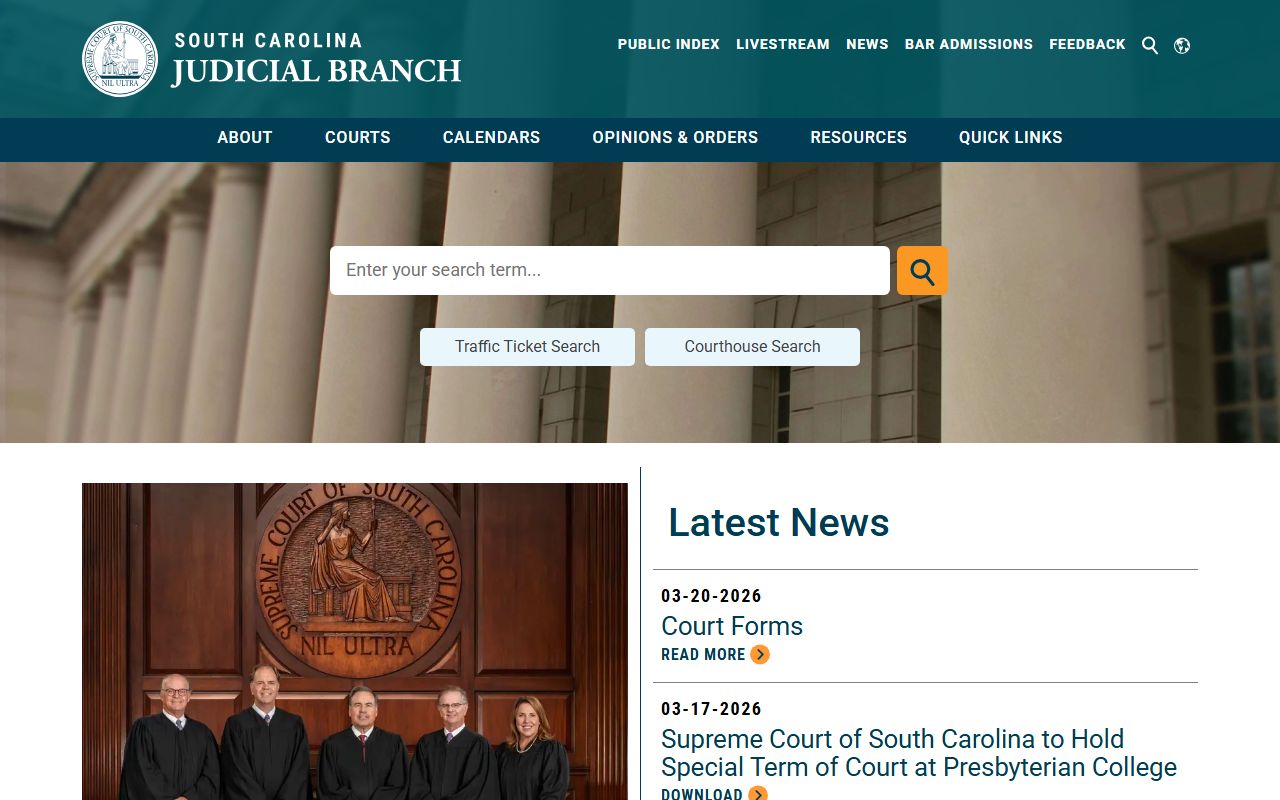
The South Carolina Judicial Branch website was recently redesigned to provide greater transparency and a better user experience for attorneys, litigants, and members of the public searching court docket records.
How to Search SC Court Dockets Online
South Carolina provides free online access to court docket records through two main systems. Which system you use depends on the court type you are researching.
For trial court records at the Circuit Court, Magistrate Court, and Municipal Court level, use the SC Case Records Search. This system lets you search by county, then filter by court type, case number, case type, party name, and date range. You can find civil and criminal case dockets from courts across all 46 counties. Note that criminal court records at the trial level are not available online in all counties; some are kept in physical form at the Clerk of Court's office and available on request.
The courthouse directory helps you locate any court in the state. The image below shows the South Carolina courthouse search tool available through the Judicial Branch.
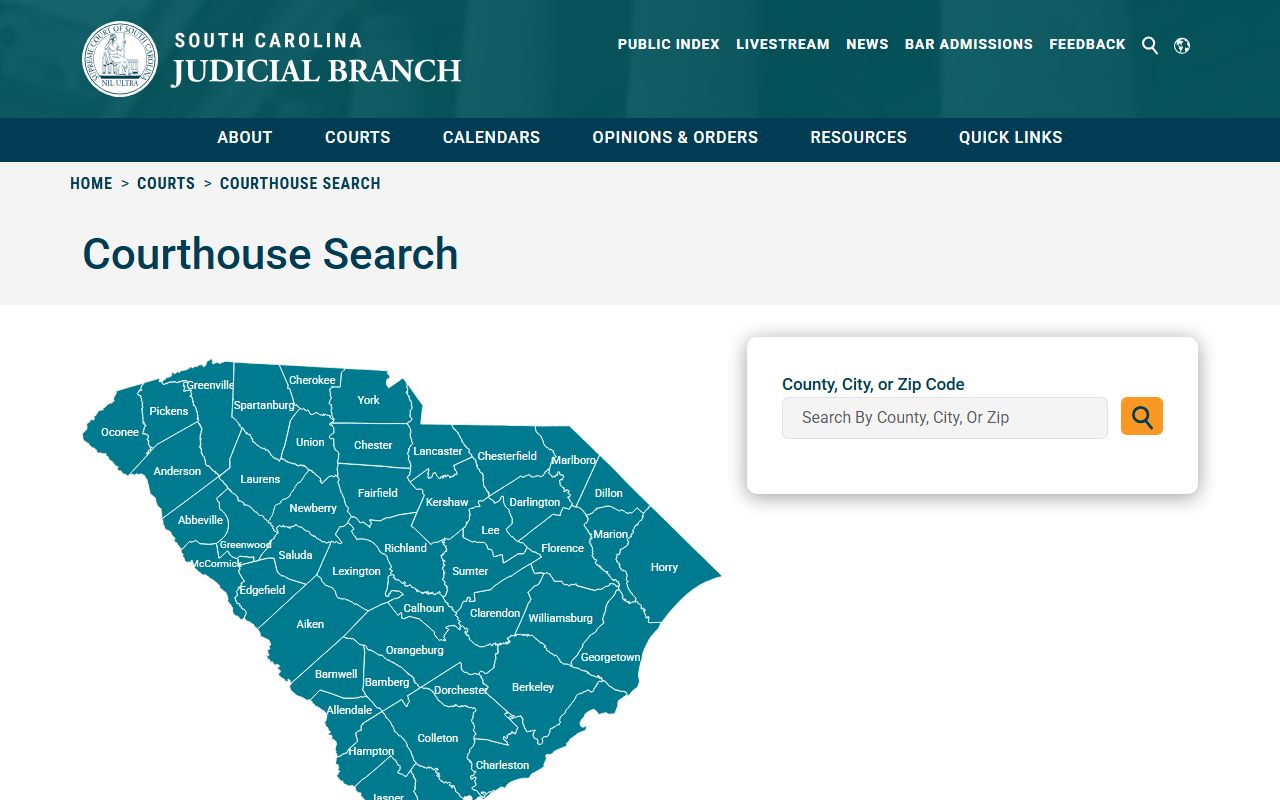
You can find contact information and directions for every courthouse in South Carolina through the SC Courthouse Search tool. This is useful when you need to visit a court in person to review docket records that are not available online.
For appellate court docket records, use C-Track. The South Carolina Appellate Court Public Index gives free public access to Supreme Court and Court of Appeals case records. You can search by case number, court type, participant last name, or SCDC inmate number. The system shows case events, filing dates, and in most cases the actual documents filed. Data is available for cases filed or pending on or after May 1, 2012.
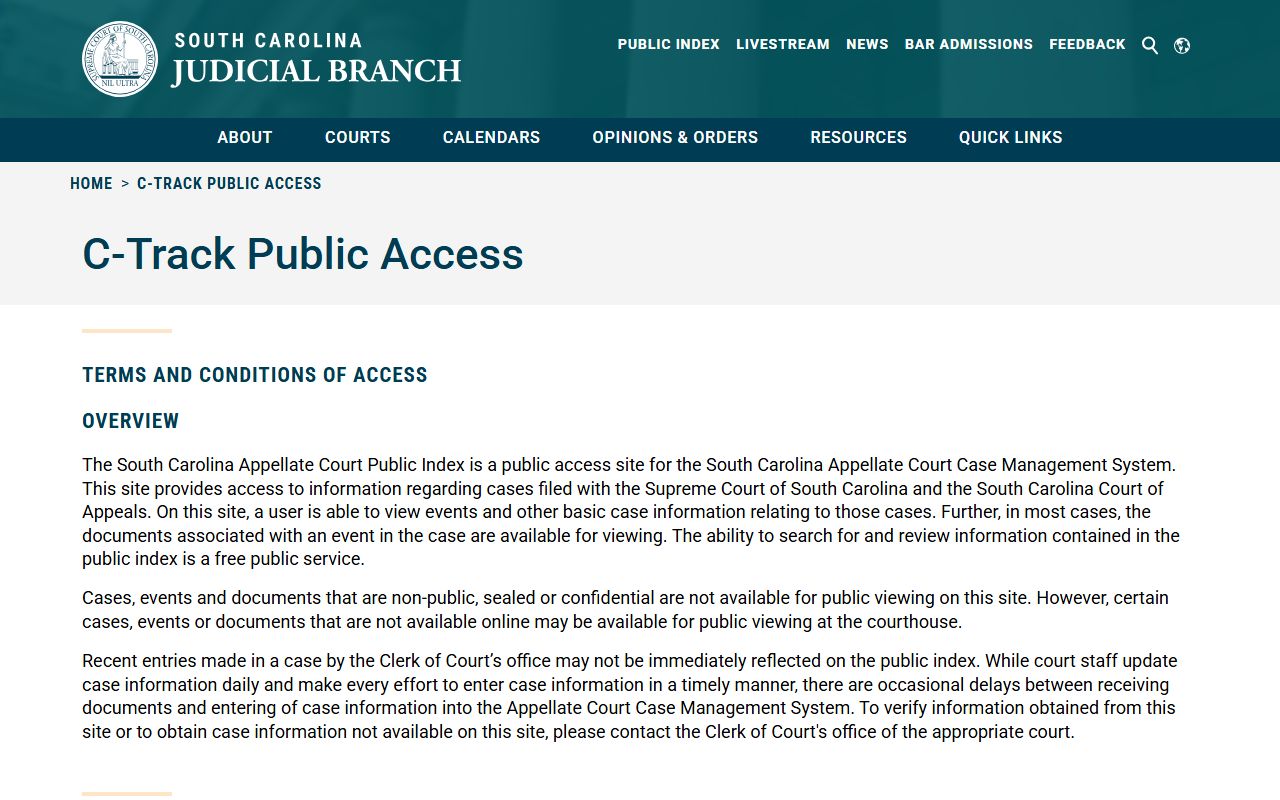
The C-Track Public Access portal gives access to Supreme Court and Court of Appeals docket records at no charge. The ability to search and review information in the public index is described by the state as "a free public service."
The Appellate Court Management System (ACMS) is the direct access portal for South Carolina appellate docket records. It covers appeals from the Court of Common Pleas, Court of General Sessions, Administrative Law Court, Workers' Compensation Commission, certiorari proceedings, and post-conviction relief cases.
SC Court Docket Number Format
South Carolina court cases are assigned docket numbers that follow a structured format. Knowing the format helps when searching for a specific case in the public index system.
Trial court docket numbers typically include the year the case was filed, a code for the case type, the county code, and a sequential case number. For example, a civil case in Charleston County filed in 2024 might appear as 2024-CP-10-0001, where CP stands for Common Pleas, 10 is the county code for Charleston, and the final number is the sequential case number assigned when it was filed. Criminal cases in the Court of General Sessions use GS instead of CP. Family Court cases use FM or other codes depending on the case type.
Appellate court docket numbers follow a different format. They typically include the year and a sequential number assigned by the appellate clerk's office. When searching C-Track, you can enter the full case number or search by party name if you do not have the number.
Note: Case number formats can vary by county and court type, so searching by party name is often more reliable than searching by number if you are unsure of the exact format.
Types of Cases on SC Court Dockets
South Carolina court dockets cover a wide range of case types. Civil cases in the Court of Common Pleas include contract disputes, personal injury claims, property disputes, and debt collection matters. These cases generate docket entries showing each filing, each motion, any hearings, and the final judgment. Civil docket records are generally available online through the county public index systems.
Criminal cases in the Court of General Sessions handle felonies and serious misdemeanors. The court docket for a criminal case shows the charges, the arrest warrant or indictment, bond hearings, pretrial motions, and the ultimate disposition. The South Carolina CDR (Criminal Disposition Reporting) Codes system tracks how criminal cases are resolved. You can look up CDR codes through the SC CDR Codes page. This system covers case files for criminal defendants in both summary court and circuit court.
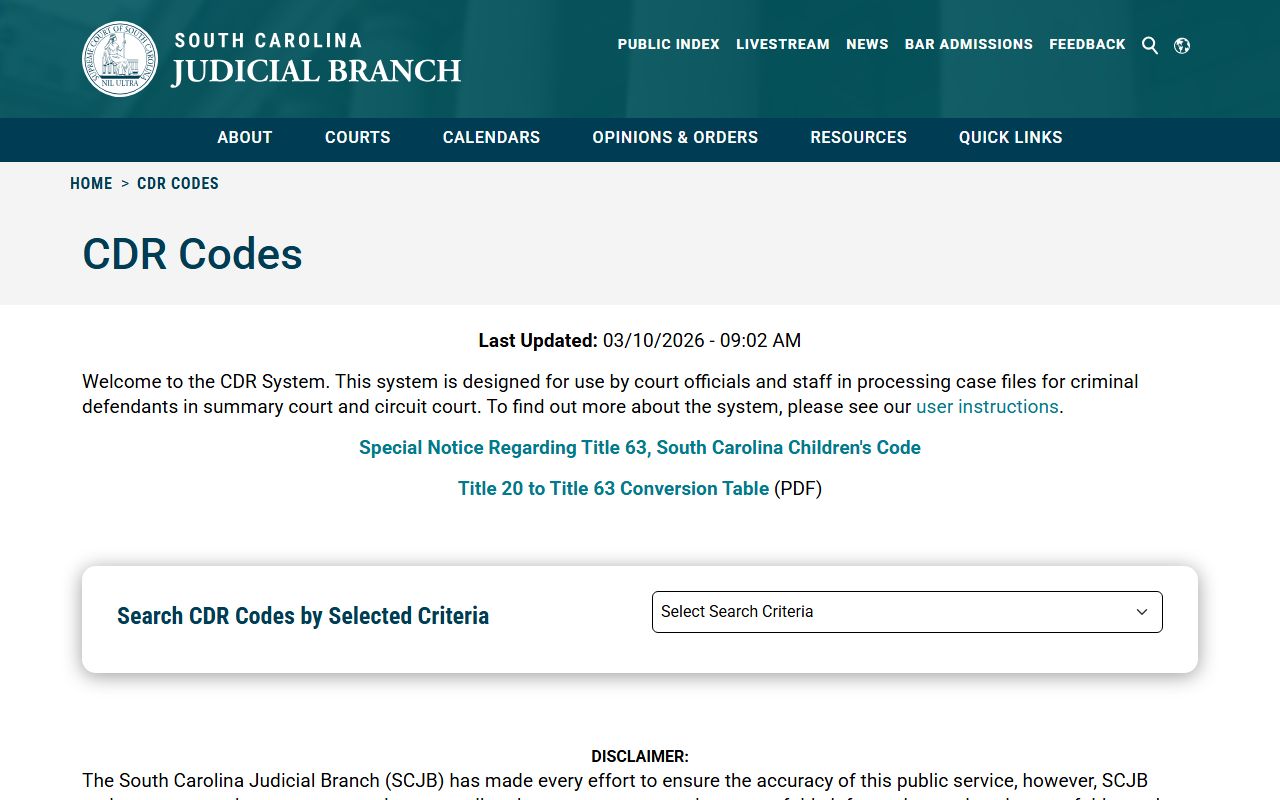
The CDR Codes system is searchable by CDR code, statute number, or keyword. It is designed for use by court officials and staff in processing criminal case files, but it is publicly accessible and useful for understanding what a case disposition means on a South Carolina court docket.
Family Court dockets cover divorce cases, child custody and support matters, adoptions, juvenile delinquency cases, and domestic violence protective orders. Probate Court dockets show estate filings, guardianship petitions, and mental health matters. Each of these court types keeps its own docket records within the South Carolina unified court system.
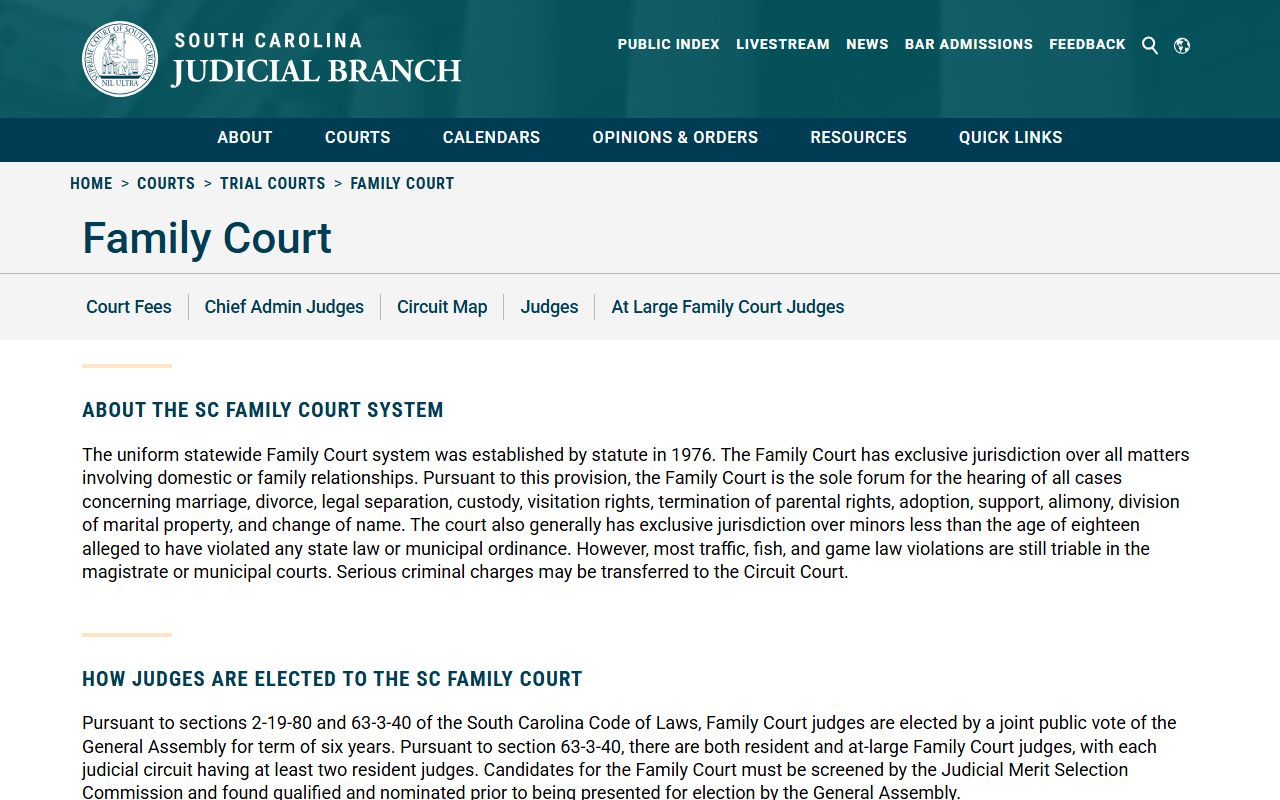
The South Carolina Family Court handles all domestic relations matters and juvenile cases across all 46 counties. Family Court docket records are public but may contain redacted information related to minor children.
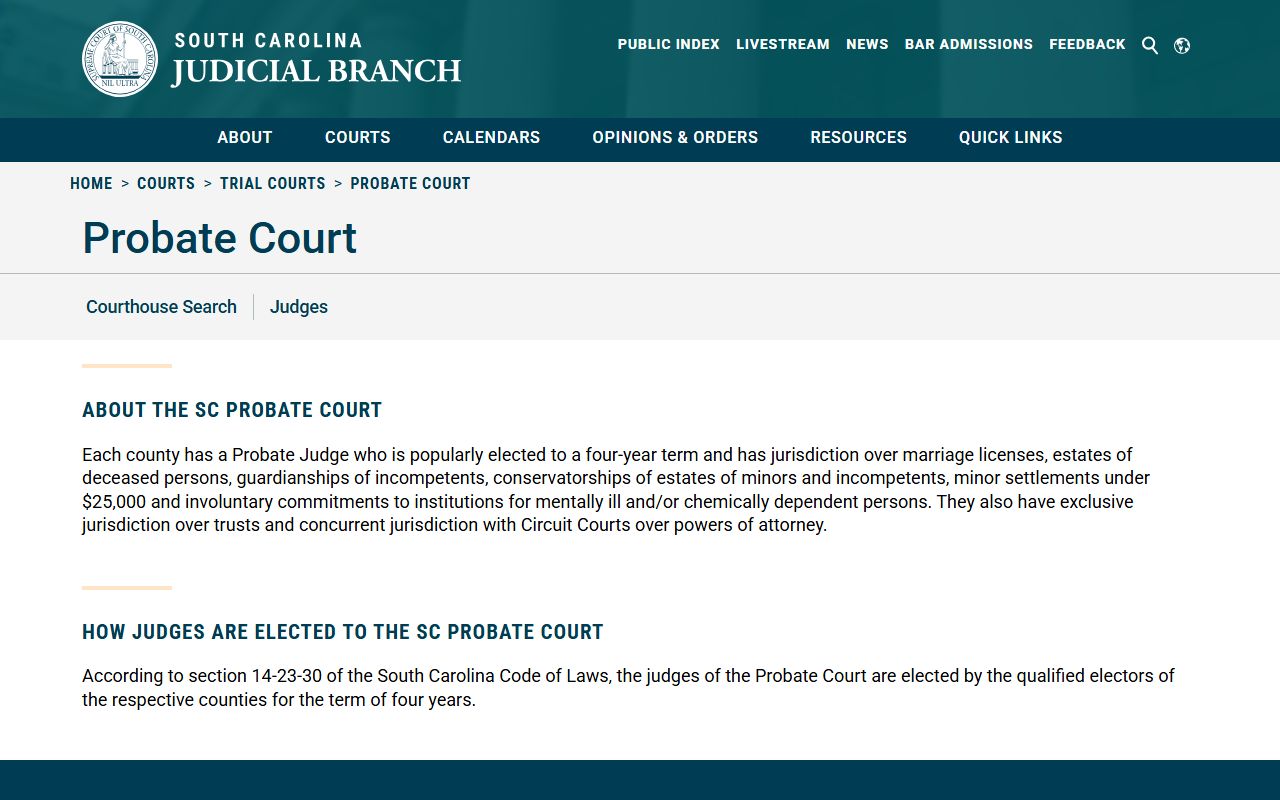
The South Carolina Probate Court exists in each of the 46 counties and handles wills, estates, guardianships, and involuntary commitments. Probate Court docket records are maintained at the county level and are generally open to the public.
SC Supreme Court and Appeals Dockets
The South Carolina Supreme Court holds at least nine terms each year, starting on the second Monday of each month except July, August, and September. Its docket records include all opinions, orders, petitions for certiorari, and other filings. The Supreme Court's exclusive jurisdiction covers death sentences, public utility rate orders, and constitutional challenges. These cases carry significant public interest and their docket records are fully accessible.
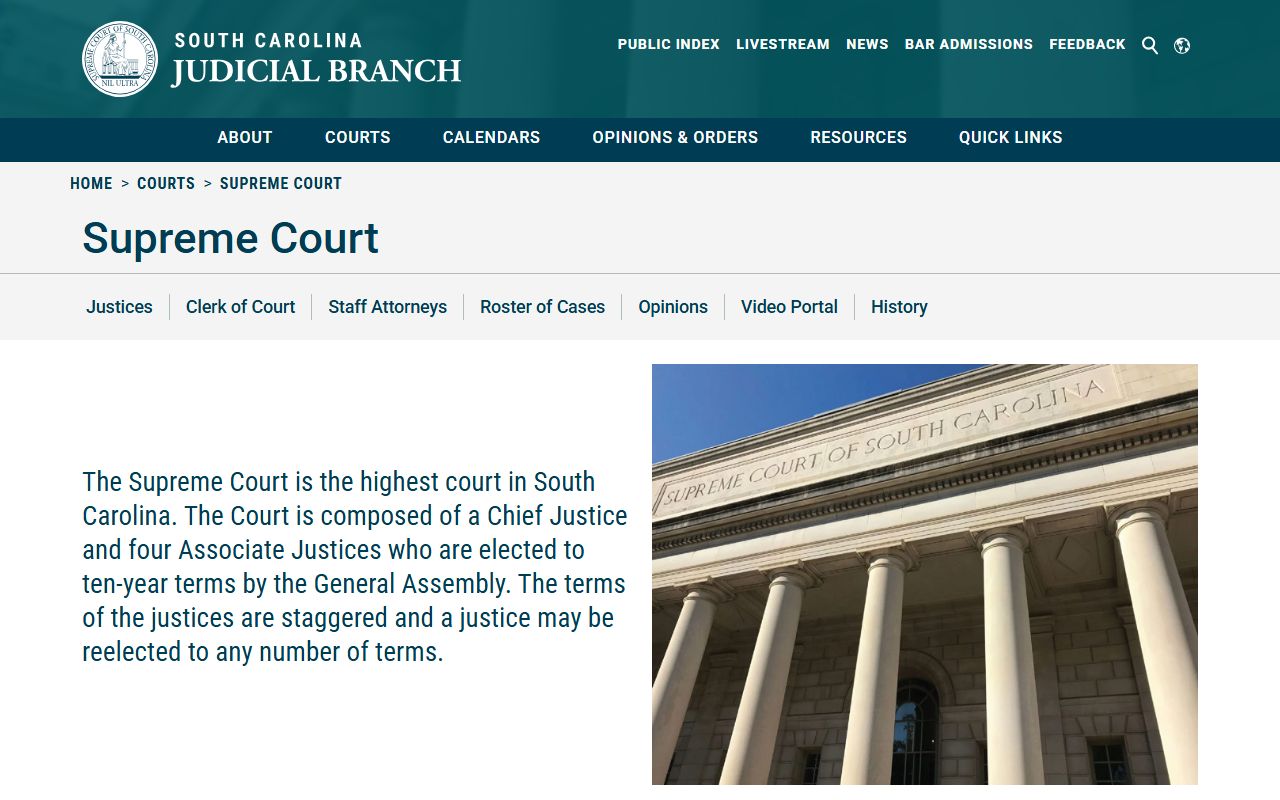
The South Carolina Supreme Court is composed of a Chief Justice and four Associate Justices. Weekly appellate court opinions are available through the Judicial Branch website, and all docket records are searchable through C-Track.
The South Carolina Court of Appeals handles the vast majority of direct appeals from trial courts. Its nine judges sit in rotating three-judge panels. The court may hear cases in any county of the state. All Court of Appeals docket records are publicly accessible through the C-Track system going back to May 2012.
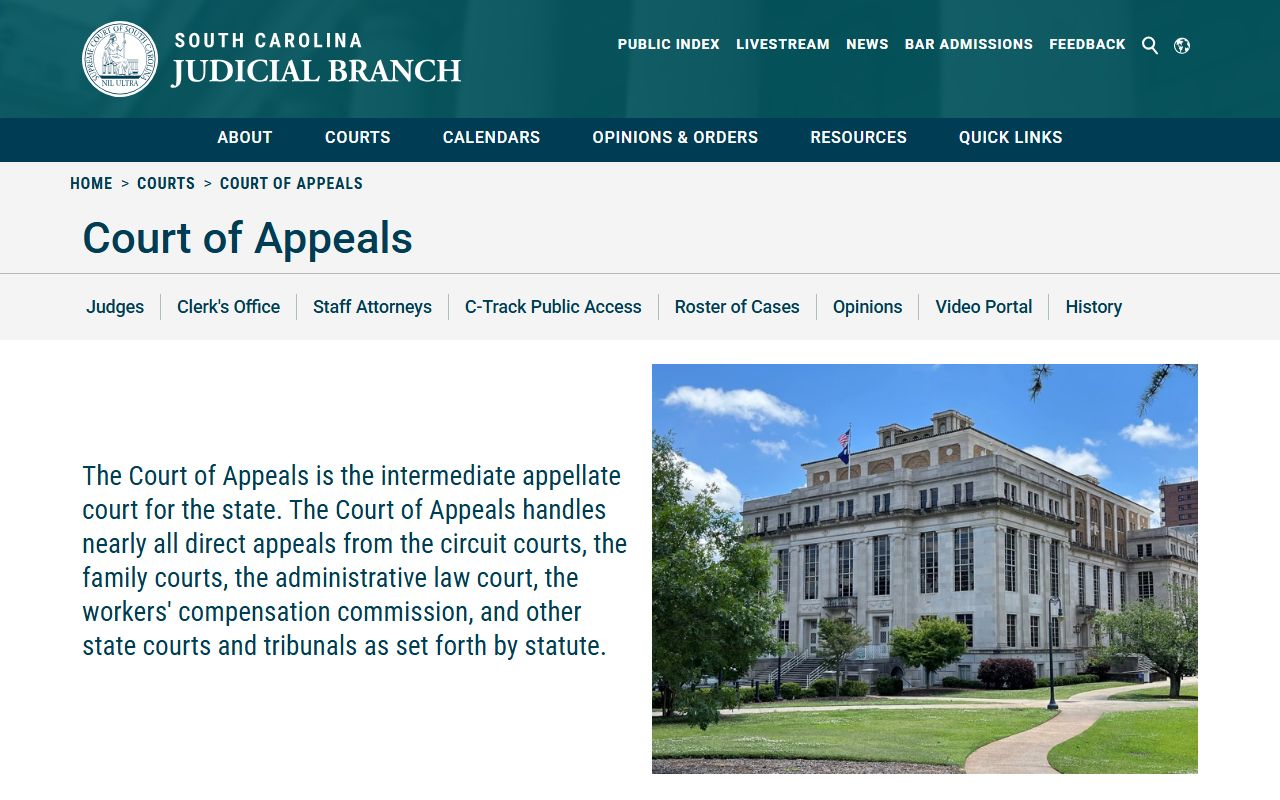
The South Carolina Court of Appeals handles appeals from circuit courts, family courts, administrative agencies, workers' compensation decisions, and administrative law judges. Its docket records are available through the ACMS portal.
Court Rosters and Scheduled Hearings
Beyond individual case dockets, South Carolina publishes court rosters showing upcoming hearings and scheduled proceedings. The roster search tool shows pending cases and scheduled motions, trials, and hearings. You can search by court type and date range to see what is coming up in a particular court.
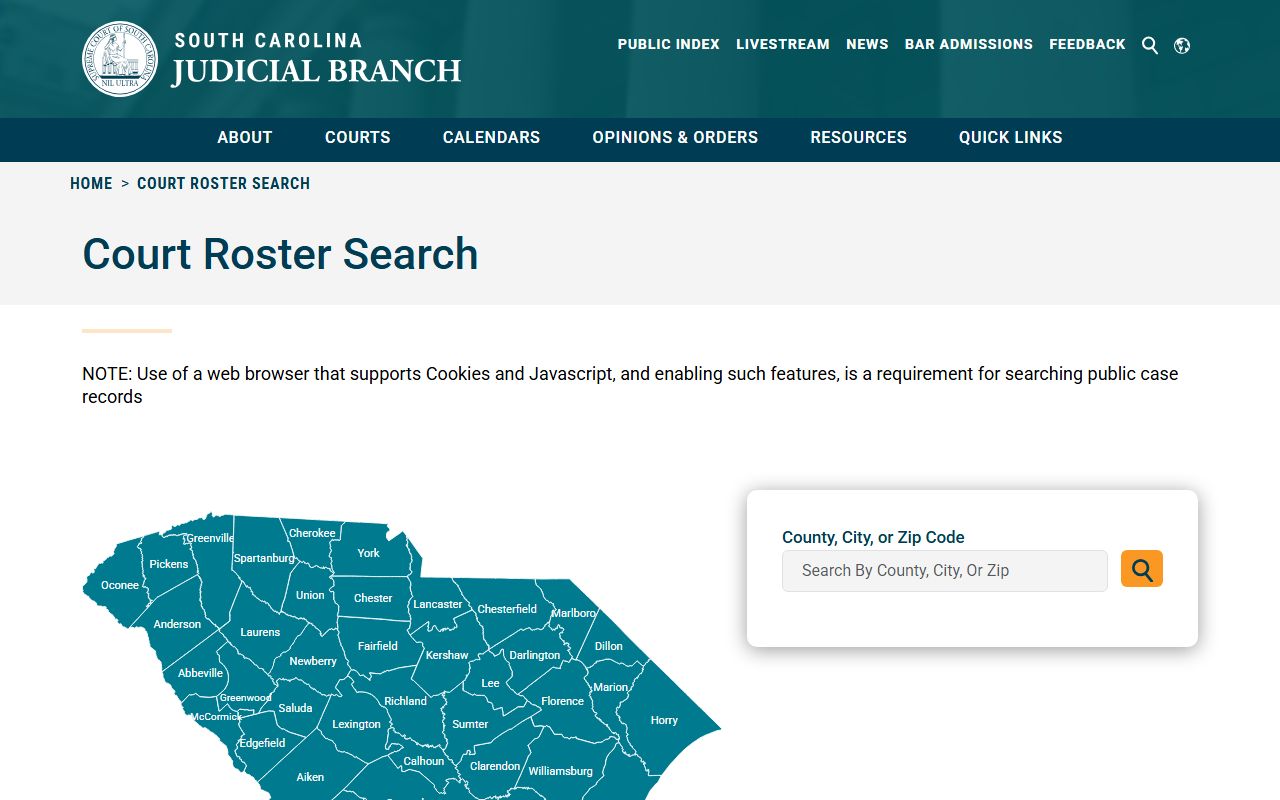
The SC Court Roster Search shows circuit court rosters by county, judge assignments by month, and court terms including hearing type and the judge assigned for each week. This is useful for attorneys, litigants, and members of the public who want to know when a specific matter is scheduled to be heard.
The South Carolina Freedom of Information Act protects the right of access to court dockets and rosters. All completed rosters are available through each county's public index. Under S.C. Code Ann. § 30-4-10, the SC FOIA protects access to court dockets, and the South Carolina Constitution itself provides that "All courts shall be public, and every person shall have speedy remedy therein for wrongs sustained."
SC Freedom of Information Act and Court Records
South Carolina court docket records are public records protected by the South Carolina Freedom of Information Act. Under S.C. Code Ann. Section 30-4-10 et seq., "public record includes all books, papers, maps, photographs, cards, tapes, recordings, or other documentary materials regardless of physical form or characteristics prepared, owned, used, in the possession of, or retained by a public body." Court records fall within this definition.
Under the FOIA, a person has the right to inspect, copy, or receive an electronic transmission of any public record. Public bodies must respond to records requests within 10 days for recent records, or 20 days for records more than 24 months old. Records must be furnished within 30 calendar days after the determination to release them. Fees are limited to the actual cost of search, retrieval, and redaction, and cannot exceed the prorated hourly salary of the lowest-paid employee capable of handling the request.
Some court records are restricted. Sealed records require a court order and a judge must provide specific reasons why sealing is necessary. Rule 41.2 of the South Carolina Rules of Civil Procedure prohibits filing documents containing certain personal identifying information. Under SC Code Ann. Section 30-2-330, individuals may request that clerks of court remove Social Security numbers, financial account numbers, and similar data from publicly accessible copies of court records. There is no fee to request such redactions.
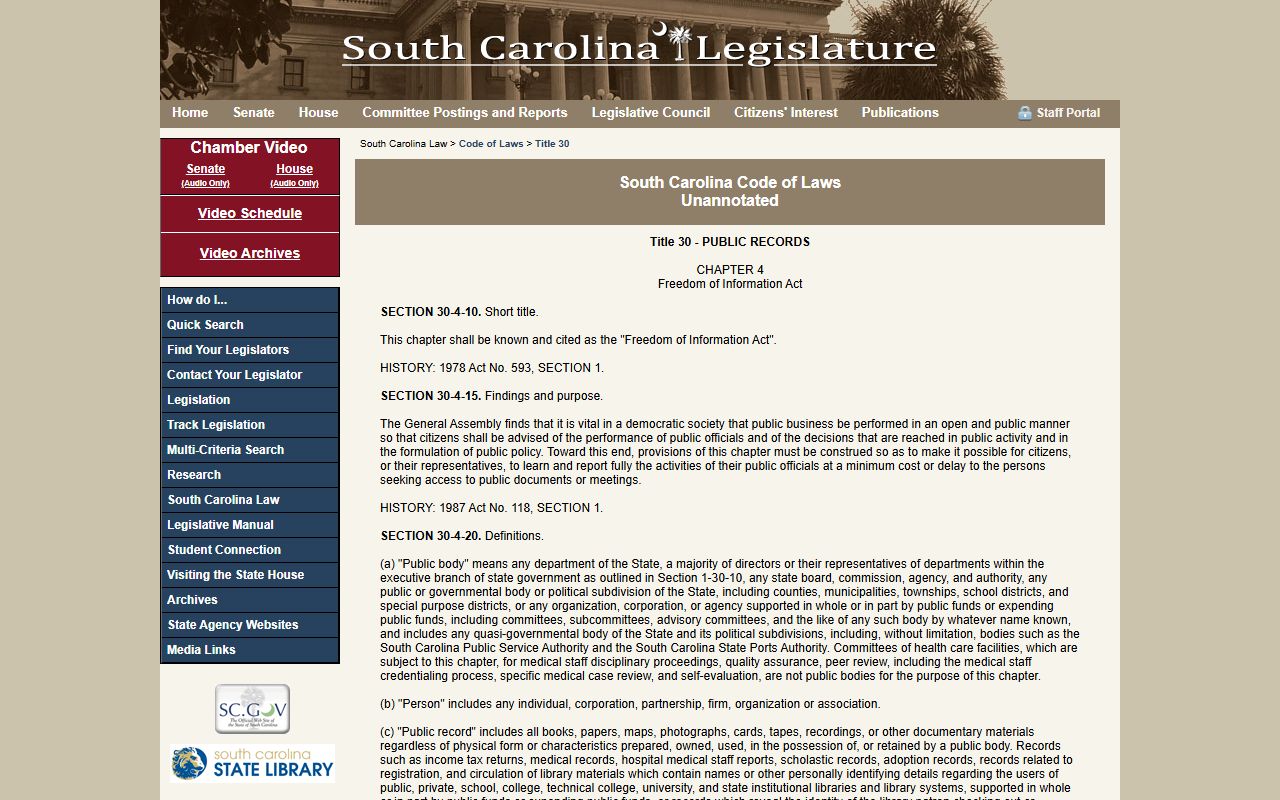
The South Carolina Freedom of Information Act is the primary law governing public access to court docket records. The General Assembly stated that "it is vital in a democratic society that public business be performed in an open and public manner so that citizens shall be advised of the performance of public officials and of the decisions that are reached in public activity."
The South Carolina Freedom of Information Act provides a detailed legal framework for court records access under state law, including rules on sealed records, trial transcripts, and the right to attend hearings.
CDR Codes for SC Criminal Court Dockets
Criminal cases on South Carolina court dockets include disposition codes known as CDR (Criminal Disposition Reporting) codes. These codes are used by court officials to process criminal case files in both summary court and circuit court. When you look at a criminal docket entry, the CDR code tells you how the case was resolved.
The SC CDR Codes system is searchable by CDR code number, statute number, or keyword. It covers Title 63, the South Carolina Children's Code, as well as standard criminal statutes. A downloadable file containing all CDR code data is available for those who need the full list. The system carries a disclaimer that the South Carolina Code of Laws is the controlling authority for criminal offense classifications and penalties.
Understanding CDR codes is useful when reading a South Carolina criminal court docket. Common dispositions include guilty pleas, acquittals, nolle prosequi (case dropped by the prosecutor), and diversion program completions. The docket entry will show the CDR code and the date of the disposition.
Fees for SC Court Docket Records
Online access to South Carolina court docket records through the state public index and C-Track systems is free. There is no charge to search case information or view docket entries online.
Fees apply when you need physical copies of documents from a case file. Clerks of Court charge per-page copy fees for paper copies of court records. Certified copies cost more than plain copies. Fees vary by county and court type. The SC FOIA limits fees to the actual cost of search, retrieval, and redaction, which cannot exceed the hourly salary of the lowest-paid qualified employee. Contact the Clerk of Court in the relevant county to confirm current copy fees before making a request.
Note: Always verify current fees with the specific court before submitting a records request, as fee schedules can change.
County Court Docket Resources in SC
Each of the 46 counties in South Carolina has its own Clerk of Court who maintains docket records for that county's courts. The county public index systems are accessible through the SC Case Records Search page, which links to individual county search tools. Select a county below to find local court docket resources and contact information.
Court Dockets in Major SC Cities
Residents of major South Carolina cities file cases in the courts of their county. Municipal courts within cities also maintain docket records for ordinance violations. Select a city below to find court docket information for that area.